Carnegie Mellon University
Christopher N.
Warren
Head of English & Professor of English and History

Scroll
Carnegie Mellon University
Head of English & Professor of English and History
About
"Inspired by real-world humanities problems—funding for research, access to books and archives, and the anonymous lives behind the printed page."
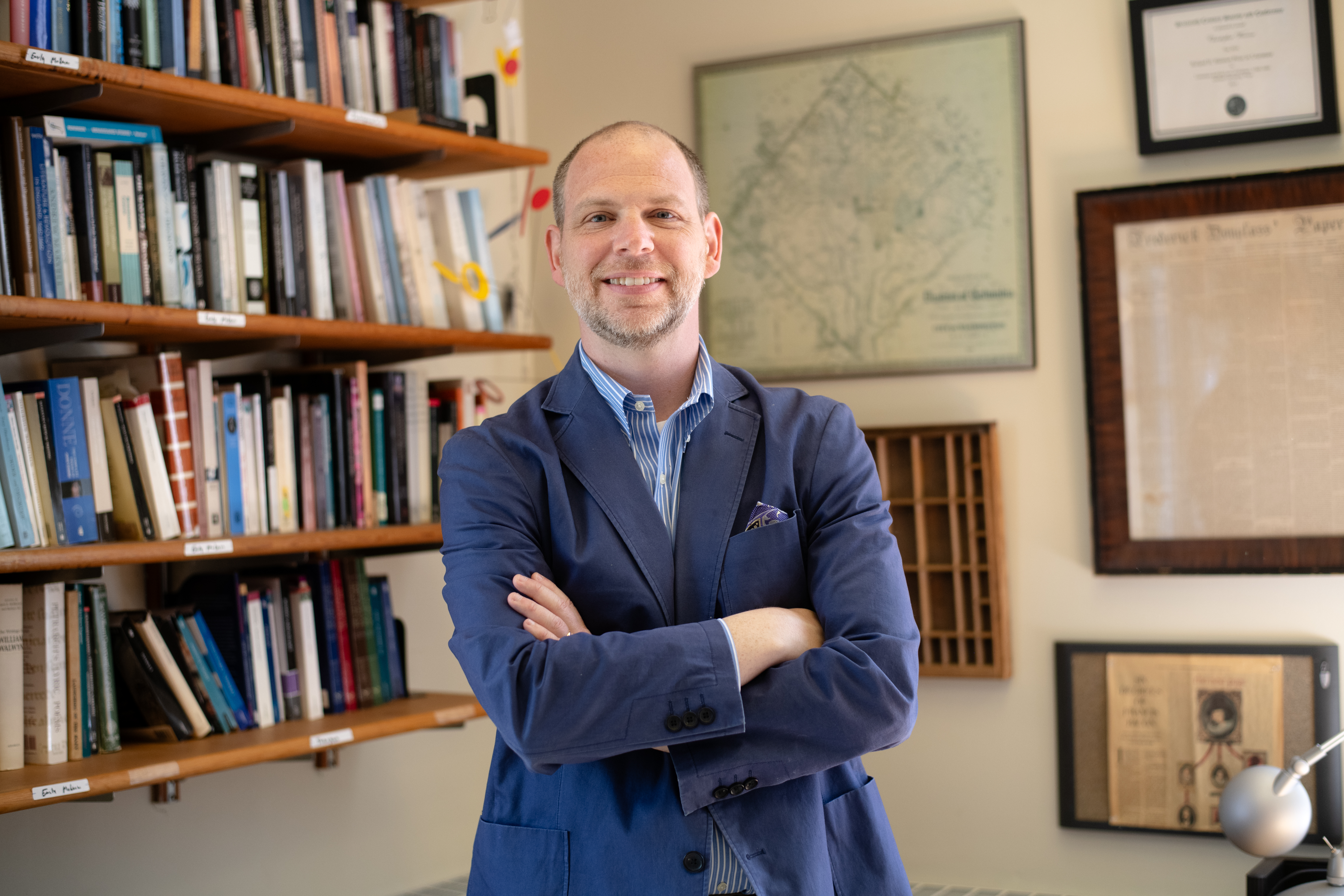
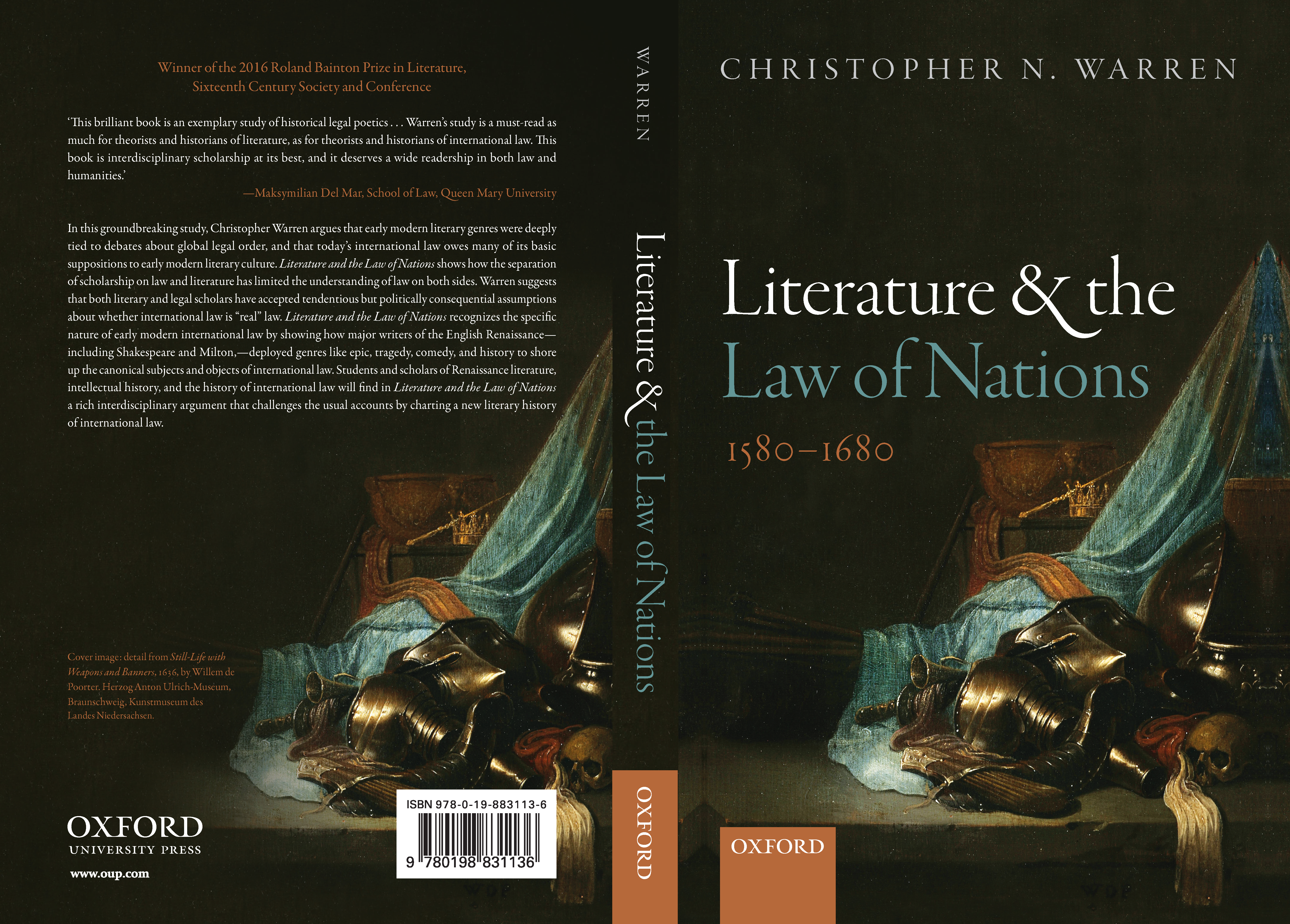
Christopher Warren is Head of English and Thomas Stockham Baker Professor of English and History (by courtesy) at Carnegie Mellon University. He co-leads Carnegie Mellon's computational humanities initiative and is the author of Literature and the Law of Nations, 1580–1680 (Oxford University Press), awarded the Roland H. Bainton Prize for Literature.
His research spans digital humanities, law and literature, political theory, early modern literature, print culture, and the history of political thought. His current focus is on "Freedom and the Press before Freedom of the Press," using machine learning and artificial intelligence to discover and center the anonymous craftsmen and women responsible for printing controversial clandestine materials in the sixteenth and seventeenth centuries. His peer-reviewed publications have appeared in Shakespeare Quarterly, Milton Studies, Digital Humanities Quarterly, The European Journal of International Law, English Literary Renaissance, and conference proceedings in computer science, including AAAI, ICDAR, and ACL. As Head of English — a department that serves every undergraduate student at Carnegie Mellon through First-Year Writing and offers five undergraduate majors, three MA programs, and two PhD programs — Warren leads a faculty of approximately 45 tenure-track, teaching-track, and special faculty, supported by five administrative staff and a high seven-figure annual budget. He holds primary responsibility for the full faculty personnel cycle — hiring, reappointment, promotion, and tenure — and for the department's strategic direction and financial stewardship.
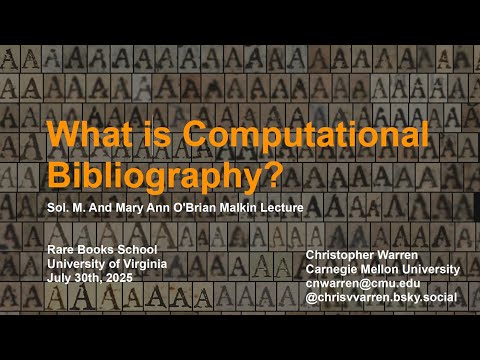
Warren is active in humanities advocacy through the National Humanities Alliance. He lives in Pittsburgh with his wife, landscape architect Julie Kachniasz, and their three children. He recently delivered the Sol. M. and Mary Ann O'Brian Malkin Lecture at the University of Virginia Rare Books School on "What is Computational Bibliography?" He is also a regular in CMU's lunchtime pickup basketball game, which has been running for decades and is, by all accounts, less dignified every time he plays.
Warren is certified by the Association of Departments of English (ADE) and the Modern Language Association (MLA) as an external reviewer, and is available for consulting and speaking engagements. He also welcomes inquiries from prospective graduate students. Reach him at cnwarren@cmu.edu.
Featured Book
A major reinterpretation of the relationship between literary culture and the development of international law in early modern England, tracing how canonical literary figures—Sidney, Shakespeare, Milton, Hobbes—shaped the very foundations of international legal thought.
The book argues that literature was not merely a reflection of legal ideas but an active force in their creation, revealing how writers participated in and transformed the emerging discourse of the law of nations.
View at Oxford University Press"A study to which the expression 'groundbreaking' truly applies."
— Jus Gentium, Journal of International Legal History
"Christopher Warren journeys adventurously and authoritatively back into the early modern world."
— Elizabeth Sauer, Review of English Studies
"Warren offers a magisterial account of how early modern literary genres inflected the discourses of modern international law… A front-running candidate for a desert-island reading list."
— Lowell Gallagher, Studies in English Literature
"Warren makes a persuasive case for literature's formative role in the development of international law… illuminating."
— Rachel E. Holmes, Renaissance Studies
"In this adventurous and bracing study, Christopher Warren challenges the disciplinary divisions that would separate key topoi in early modern literary genres from the emergent discourse of international law… Christopher Warren's work brilliantly leads in this daunting but necessary exploration."
— Lorna Hutson, Oxford University
"Warrens' detailed and tightly-reasoned book… hugely successful; its interest in recovering traces of contemporary legal debates within literary and non-literary texts leads it to a reconstruction of early modern sense-making."
— Robert O. Steele, SHARP News
"A rewarding book."
— Andrew Hadfield, The Seventeenth Century
Scholarship
Research & Administrative Projects
A digital reconstruction of the early modern social network—who knew whom in sixteenth and seventeenth-century Britain. The project uses a statistical method to infer social connections from historical documents, allowing scholars to explore and contribute to the network.
Using machine learning and artificial intelligence to identify the anonymous craftsmen and women who printed controversial clandestine materials in early modern Britain. By analyzing damaged type, ornaments, and typographical patterns, the project recovers suppressed histories.
A network analysis and interactive visualization of The Guardian's "100 best novels of all time" list. Rather than accepting the final rankings at face value, the project recovers the full 677 titles named by 172 voters to reveal the communities of taste and social dynamics that shape canon formation.
Warren co-leads CMU's computational humanities initiative with Nicky Agate (University Libraries / CMU Press), building infrastructure for scholarship that combines literary and cultural analysis with machine learning, network analysis, and data visualization. He chaired the 2025 Dietrich College cluster hire in computational humanities and is launching the country's first Ph.D. in Computational Cultural Studies (fall 2026), along with a Ph.D. certificate and M.S. in Computational Humanities available across CMU.
Lectures & Talks
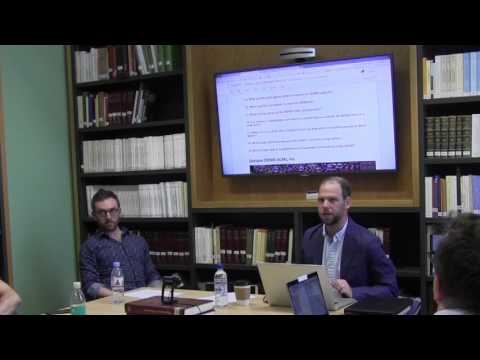
Lectures, public talks, and interviews on digital humanities, law and literature, and early modern print culture.

Media & Press
Coverage also syndicated in hundreds of other newspapers and outlets.
Curriculum Vitae